Category: Uncategorized

  • Where to Find the Best Lunch in Amsterdam

    Amsterdam is a city of canals, bicycles, and world-class culture—but ask any traveler or local, and they’ll tell you that food is one of the best ways to experience this vibrant destination. From cozy brown cafés to trendy vegan spots, the city’s lunch scene is bursting with options that cater to every taste. If you’re searching for the best lunch in amsterdam, you’ll be happy to know that this city delivers a perfect balance of traditional Dutch flavors and innovative international cuisine.

    Why Lunch in Amsterdam Is So Special

    Unlike cities that lean heavily on dinner culture, Amsterdam has a strong midday dining tradition. Locals love their lunch breaks, and whether it’s a simple broodje (sandwich) or a hearty pancake stack, there’s something comforting about the way Amsterdammers approach food. The city’s restaurants often focus on seasonal, local ingredients, and sustainability is at the heart of many menus. This means you’ll not only enjoy delicious dishes but also feel good about what’s on your plate.

    Traditional Dutch Lunch Classics

    Before diving into the trendy and modern spots, let’s talk about the staples. To truly understand the best lunch in Amsterdam, you have to try the local flavors:

    • Broodjes (Sandwiches): Think freshly baked bread filled with cheese, smoked salmon, or roast beef. Many cafés serve broodjes that are as filling as they are flavorful.
    • Dutch Pancakes: Larger and thinner than American pancakes, they can be sweet or savory. A pancake topped with bacon and apple is a must-try.
    • Erwtensoep (Pea Soup): Especially comforting in the colder months, this thick green soup is served with rye bread and sausage.

    These dishes highlight the soul of Dutch cuisine and are an essential part of experiencing lunch the way locals do.

    The Modern Twist: Trendy Cafés and Bistros

    Amsterdam has an incredible café culture, with many spots perfect for a relaxed lunch. If you’re on the hunt for the best lunch in Amsterdam, keep an eye out for these types of places:

    • Healthy and Plant-Based Cafés: The city is home to an impressive number of vegan and vegetarian-friendly restaurants. Places like Vegan Junk Food Bar or Spirit Amsterdam put a fresh spin on lunch by combining comfort food with plant-based innovation.
    • Brunch All Day: Spots like Dignita and Little Collins serve up avocado toast, shakshuka, and specialty coffee that will make you want to linger all afternoon.
    • International Influence: From Indonesian rice tables to Middle Eastern mezze, Amsterdam’s multicultural roots shine through its food scene. This variety makes it easy to find the best lunch in Amsterdam, no matter your cravings.

    Lunch With a View

    Amsterdam’s beauty isn’t just on your plate—it’s in the scenery too. For a memorable lunch, head to restaurants and cafés along the canals or rooftops with panoramic views. Sitting at a waterside terrace on a sunny day while enjoying a fresh salad or seafood platter is pure bliss. Some canal-side cafés even let you watch boats float by as you savor your meal.

    Local Markets: A Hidden Gem for Lunch

    For those who love to mix food with exploration, Amsterdam’s markets are the ultimate lunch experience. Albert Cuyp Market and Foodhallen are two must-visits. At these lively spots, you’ll find everything from stroopwafels and herring sandwiches to gourmet burgers and artisanal cheeses. Not only is this one of the best ways to discover local flavors, but it’s also where many locals grab a quick bite.

    Tips for Finding the Best Lunch in Amsterdam

    • Follow the locals: If a café is packed with Amsterdam residents, it’s likely worth the wait.
    • Go early on weekends: Popular brunch spots can get crowded, so aim for an earlier meal.
    • Try something new: Don’t be afraid to go beyond Dutch classics and sample the city’s global influences.

    Final Thoughts

    When it comes to food, Amsterdam is a city that never disappoints. From traditional broodjes and Dutch pancakes to modern plant-based creations and global flavors, there’s something here for everyone. Whether you prefer a quiet café tucked in a historic street, a lively market buzzing with energy, or a trendy spot serving Instagram-worthy plates, you’ll find plenty of contenders for the best lunch in Amsterdam.

  • Discover the Magic of Sundarbans: Why a Sundarban Tour Package is the Best Way to Explore

    When people talk about India’s natural wonders, the Sundarbans always comes up as one of the most mysterious and enchanting places. Spread across India and Bangladesh, this UNESCO World Heritage Site is not only the world’s largest mangrove forest but also the home of the famous Royal Bengal Tiger. If you’re planning an escape from the hustle and bustle of city life, choosing a Sundarban tour package is one of the smartest and most convenient ways to explore this magical land.


    The Allure of the Sundarbans

    The Sundarbans is a world like no other. Imagine cruising through narrow rivers surrounded by thick mangroves, hearing the calls of exotic birds, and watching playful dolphins glide alongside your boat. This isn’t your everyday vacation—it’s an adventure wrapped in nature’s mystery.

    What makes the Sundarbans even more special is its wildlife. Besides the elusive tigers, it’s also home to saltwater crocodiles, spotted deer, wild boars, snakes, and over 250 species of birds. The atmosphere feels untouched, raw, and thrilling—perfect for anyone who craves an authentic travel experience.


    Why Choose a Tour Package?

    A big question for many travelers is whether to plan everything on their own or opt for a ready-made plan. With a Sundarban tour package, you get the benefit of a hassle-free journey. Everything—from transportation, meals, boat rides, to accommodation—is taken care of. This allows you to relax and fully immerse yourself in the experience.

    Think about it: instead of worrying about ferry timings, permits, or where to stay, you’ll have a local team guiding you every step of the way. They know the region, understand the tides, and can take you to the best spots for wildlife viewing. It’s like having a personal key to unlock the mysteries of the Sundarbans.


    A Glimpse of What You’ll Experience

    Most packages begin from Kolkata, where travelers are transported to Godkhali—the gateway to the Sundarbans. From there, your adventure truly begins on a boat. Over the next few days, you’ll cruise through winding rivers like Bidya, Durgadooni, and Malta, each offering breathtaking scenery.

    You’ll visit watchtowers such as Sudhanyakhali and Sajnekhali, famous for tiger and bird sightings. Cultural experiences are often included too—you might get to see a local folk performance, taste authentic Bengali cuisine, or visit nearby villages to understand the lifestyle of the people living in this fragile ecosystem.

    And of course, nothing compares to that magical moment when you spot a tiger swimming across the river or walking along the muddy banks. Even if you don’t see one, the anticipation itself creates unforgettable excitement.


    Social-Friendly Moments

    Let’s face it—half the joy of travel these days is sharing your experiences with friends and followers. The Sundarbans is incredibly photogenic. From sunrise over the mangroves to the colorful boats dotting the rivers, every angle feels like it belongs on Instagram.

    A Sundarban tour package often includes sunrise and sunset cruises, giving you those golden-hour shots that make your social posts pop. Don’t forget to capture the candid moments too: villagers weaving fishing nets, kids playing near the river, or flocks of migratory birds flying overhead. These glimpses of local life add authenticity to your travel story.


    Tips for Making the Most of Your Trip

    1. Pack Light, but Smart – Comfortable clothes, sunglasses, sunscreen, and mosquito repellent are must-haves.
    2. Stay Eco-Friendly – Remember, this is a delicate ecosystem. Avoid plastic and dispose of waste responsibly.
    3. Keep Your Camera Ready – Wildlife sightings happen in the blink of an eye. A zoom lens or binoculars can make a big difference.
    4. Soak in the Experience – Don’t spend all your time behind the lens. Take a moment to just breathe, listen, and enjoy the tranquility.

    Who Should Go?

    The Sundarbans is perfect for nature lovers, wildlife photographers, families seeking adventure, and even solo travelers who want something unique. Whether you’re a seasoned traveler or someone taking their first step into eco-tourism, there’s something for everyone.

    Couples often find it romantic—imagine watching the sun set over the river while floating on a quiet boat. Families love the educational side, as kids get to see nature up close. And adventurers? Well, nothing beats the thrill of being in tiger territory!


    Final Thoughts

    The Sundarbans is not just a destination—it’s an experience that stays with you long after the trip is over. From the mysterious mangroves to the vibrant local culture, every moment feels like a discovery. Choosing a Sundarban tour package makes it easier to dive into this world without stress, ensuring you don’t miss the highlights while still leaving space for those spontaneous, magical moments.

  • Exploring Social Connections and Lifestyle in Hari Nagar

    Hari Nagar, located in West Delhi, is a bustling locality known for its lively culture, vibrant markets, and growing lifestyle trends. From cozy cafés to modern entertainment hubs, people here are always looking for new ways to connect, relax, and enjoy life after a long day of work.

    In recent years, there’s been a noticeable rise in online searches for Call Girls In Hari Nagar. While this keyword often surfaces in digital spaces, it reflects a broader curiosity about companionship, nightlife, and lifestyle options in the area. Instead of focusing only on the term itself, it’s important to understand the underlying social dynamics that drive such interest.

    The Lifestyle Perspective

    Hari Nagar has become a hotspot for young professionals, students, and working-class individuals who seek a balance between work and leisure. With malls, restaurants, and late-night food joints, the area offers plenty of opportunities for socializing. The keyword Call Girls In Hari Nagar indicates that people are also exploring more personalized forms of companionship beyond the usual social gatherings.

    The Social Angle

    This growing trend highlights the importance of companionship in today’s fast-paced urban life. While traditional relationships remain important, people often look for easier, discreet, and flexible ways to find connection. This has led to a rise in online platforms where such searches are common.

    Responsible Choices

    It’s essential to remember that whenever topics like Call Girls In Hari Nagar appear in discussions, they should be approached responsibly. Safety, respect, and consent are crucial, and people must be aware of the legal and ethical considerations involved. Promoting a healthy and respectful social environment benefits everyone in the community.

  • Understanding Companionship and Modern Social Perspectives

    In today’s fast-changing world, conversations about relationships, companionship, and social connections have become far more open than they used to be. People are beginning to understand that companionship isn’t always about following traditional rules. Sometimes, it’s about finding comfort, confidence, or simply sharing time with someone who understands your needs. This is one reason why topics like Call Girls in Bhondsi and Call Girls in Badshahpur have become part of larger discussions about lifestyle choices, social freedom, and individual expression.

    Shifting Social Narratives

    Not long ago, many people would hesitate to even bring up these subjects. But now, the narrative has shifted. More individuals are openly acknowledging that companionship services exist and that people approach them for different reasons. Some are looking for company after a long day, while others may be curious about new experiences or simply want to share meaningful conversations without judgment.

    When you look at areas like Call Girls in Bhondsi, it’s not just about the stereotype often associated with the term. It’s also about the social role of companionship, emotional bonding, and the simple human desire to connect with someone in a world where loneliness is common.

    The Lifestyle Angle

    Modern lifestyles are fast-paced. Between long office hours, hectic commutes, and the constant pull of digital life, many people find themselves without the time to maintain steady relationships. That’s why there’s a growing interest in flexible companionship arrangements.

    In areas like Call Girls in Badshahpur, these services often appeal to professionals, business travelers, or even locals who prefer discreet, stress-free companionship without strings attached. What’s interesting is how this trend mirrors larger changes in urban living: independence, convenience, and the prioritization of personal comfort.

    Breaking Stereotypes

    A common misconception is that such services are purely transactional or lack depth. In reality, many people describe their experiences as surprisingly fulfilling on an emotional level. Companions can provide a non-judgmental space to share stories, laughter, or even quiet moments of understanding.

    When we hear terms like Call Girls in Bhondsi, the picture should be more nuanced. It’s not always about glamour or mystery — sometimes, it’s simply about everyday people creating a unique form of human connection that suits modern realities.

    Safety and Mutual Respect

    Of course, whenever this topic comes up, safety and respect are key points of discussion. Reliable companionship services put emphasis on professionalism, discretion, and ensuring both parties feel secure. For those exploring options like Call Girls in Badshahpur, the focus often goes beyond surface-level attraction. It’s about establishing boundaries, communicating clearly, and creating an atmosphere where trust matters most.

    The healthier the conversation around these services becomes, the more awareness people have about safe practices and mutual respect.

    A Broader Cultural Context

    If you zoom out, this isn’t just about one or two neighborhoods. Globally, companionship services have evolved in how they are perceived. Cities around the world are moving toward a culture that accepts different lifestyle choices without labeling them as “wrong” or “taboo.”

    In India, especially in rapidly developing areas like Gurgaon and its surroundings, the growth of neighborhoods such as Bhondsi and Badshahpur reflects this trend. People living here are diverse, ambitious, and exposed to global ideas. That naturally shapes how they view topics like relationships and companionship.

    Humanizing the Conversation

    The most important part of this discussion is to humanize it. Behind every keyword or phrase, there are real individuals with unique stories. Whether it’s someone searching for Call Girls in Bhondsi or another person curious about Call Girls in Badshahpur, both sides of the experience involve people who deserve dignity and respect.

    Reducing these conversations to gossip or judgment only harms the progress society is making toward acceptance and empathy.

    Final Thoughts

    At the end of the day, companionship is a deeply personal choice. Some people find it in friendships, others in long-term relationships, and some through professional services. There’s no single “right” path — what matters is that it brings comfort, positivity, and a sense of balance to life.

    By opening up conversations around subjects like Call Girls in Bhondsi and Call Girls in Badshahpur, society can move away from old stereotypes and create space for understanding. It’s not about glamorizing or dismissing, but about recognizing that human connection takes many forms — and all of them deserve to be seen with compassion.

  • The Complete Guide to Choosing the Right Badminton Court Flooring

    Badminton isn’t just about quick reflexes and powerful smashes — the playing surface plays a huge role in performance, comfort, and safety. Whether you’re setting up a court for a sports club, school, or even your backyard, understanding badminton court flooring, badminton court materials is essential. The right choice can enhance gameplay, prevent injuries, and ensure durability for years.

    Why Flooring Matters in Badminton

    If you’ve ever played on the wrong type of surface, you’ll know it instantly. A good badminton court floor isn’t just about aesthetics — it must absorb impact, provide proper traction, and allow players to move swiftly without strain. Professional courts follow Badminton World Federation (BWF) guidelines, but recreational spaces can also benefit from high-quality surfaces that mimic these standards.

    Types of Badminton Court Flooring

    When exploring badminton court flooring, badminton court materials, you’ll find several popular options:

    1. Wooden Flooring

    • Best for: Professional indoor courts
    • Advantages: Excellent shock absorption, great bounce, and long-lasting durability when maintained properly
    • Considerations: Requires regular polishing and may be costlier to install.

    Many top-level tournaments are played on wooden floors, often covered with synthetic mats for extra grip and protection.

    2. Synthetic (PVC or Vinyl) Flooring

    • Best for: Indoor multipurpose sports halls
    • Advantages: Cost-effective, good grip, easy to maintain, and available in various colors and designs
    • Considerations: May not provide the same “natural” feel as wood but is excellent for recreational and competitive play.

    3. Rubberized Flooring

    • Best for: Training centers and multi-sport facilities
    • Advantages: High shock absorption, excellent grip, reduces strain on knees and ankles
    • Considerations: Less common in professional tournaments but ideal for player safety during training.

    4. Acrylic Court Surfaces

    • Best for: Outdoor badminton courts
    • Advantages: Weather-resistant, customizable colors, and relatively low maintenance
    • Considerations: Slightly harder on joints compared to wooden or rubberized floors.

    Key Factors to Consider Before Choosing

    When deciding on badminton court flooring,badminton court materials, think about:

    • Location: Indoor or outdoor use will heavily influence your choice. Outdoor courts need weather-proof materials.
    • Budget: Some materials have higher upfront costs but lower maintenance, while others are cheaper initially but require frequent upkeep.
    • Player Safety: Shock absorption and grip should be top priorities to prevent injuries.
    • Durability: High-traffic courts demand stronger surfaces to avoid early wear and tear.
    • Compliance: If you aim for professional tournaments, ensure the flooring meets BWF standards.

    Installation Tips

    Even the best badminton court flooring, badminton court materials won’t perform well without proper installation. Always work with experienced sports flooring contractors who understand leveling, cushioning, and line marking standards. A poorly installed floor can cause uneven bounce, water damage, or safety hazards.

    Maintenance and Longevity

    To keep your badminton court in peak condition:

    • Clean the surface regularly to remove dust and sweat buildup.
    • Avoid dragging heavy equipment across the floor.
    • Schedule periodic inspections for any signs of wear, cracks, or warping.
    • For wooden courts, re-polish when the shine starts fading. For synthetic floors, use recommended cleaning agents only.

    Eco-Friendly Options

    Sustainability is becoming an important consideration in sports infrastructure. Some manufacturers now offer recycled PVC, bamboo-based wooden planks, or natural rubber alternatives. These materials can reduce environmental impact without compromising on performance.

    Choosing the Right Supplier

    When sourcing badminton court flooring, badminton court materials, look for:

    • Positive client reviews and past project experience
    • BWF-approved products (if aiming for professional play)
    • A clear warranty and after-sales service policy
    • Options for both flooring and accessories like nets, posts, and boundary markings

    Final Thoughts

    Badminton is a sport of precision, speed, and agility — and the court beneath your feet is as important as the racket in your hand. Investing in the right badminton court flooring, badminton court materials can elevate the playing experience, protect athletes from injuries, and ensure the court lasts for years to come. Whether you go for the timeless feel of wooden flooring, the practicality of synthetic surfaces, or the resilience of acrylic outdoor courts, making an informed choice will pay off every time the shuttlecock takes flight.

    With the right flooring, every rally becomes smoother, every jump safer, and every game more enjoyable. So, next time you step onto a badminton court, take a moment to appreciate the ground beneath your feet — it’s silently doing a lot more for your game than you think.

  • Solar Park and the Innovative Concept of Solar Trees

    As the global demand for renewable energy continues to rise, solar power has taken center stage in creating a cleaner and greener planet. From massive utility-scale projects to small, innovative designs, solar technology is rapidly evolving. ASolar Park  represents large-scale solar power generation, while the concept of a solar tree brings a creative, space-saving twist to urban solar installations. Together, these advancements showcase the versatility and potential of solar energy in both rural and urban landscapes.

    Understanding a Solar Park

    A solar park, also known as a solar farm, is a large area of land where numerous solar panels are installed to generate electricity on a utility scale. These installations are typically connected to the power grid and can produce enough energy to supply thousands of homes and businesses.

    Solar parks are strategically located in regions with high sunlight exposure to maximize efficiency. They can range in size from a few megawatts to hundreds of megawatts, depending on the land available and the project’s capacity. The electricity generated is clean, renewable, and contributes significantly to reducing greenhouse gas emissions.

    Benefits of Solar Parks

    1. Massive Power Generation – Capable of producing large amounts of electricity for widespread distribution.
    2. Lower Carbon Footprint – Reduces reliance on fossil fuels.
    3. Scalable Projects – Can be expanded based on energy demand.
    4. Job Creation – Solar parks create employment during construction, operation, and maintenance.
    5. Cost-Effective in the Long Term – After initial setup, operating costs are minimal.

    The Rise of the Solar Tree

    A solar tree  is a unique and innovative structure that resembles the shape of a tree, with “branches” holding solar panels instead of leaves. This design is ideal for urban environments where space for traditional solar panel installations is limited. Solar trees can be installed in parks, streets, parking lots, or even commercial complexes, providing both functionality and an aesthetic appeal.

    In addition to generating electricity, some solar trees integrate features like LED lighting, charging ports for electric vehicles, and even Wi-Fi hotspots. This makes them practical for public spaces, combining sustainability with convenience.

    Advantages of Solar Trees

    1. Space Efficiency – Takes up very little ground area while producing significant energy.
    2. Urban-Friendly – Can be placed in crowded cities without large land requirements.
    3. Aesthetic Design – Adds visual appeal while promoting green energy.
    4. Multi-Purpose Use – Can include lighting, charging stations, and other smart features.
    5. Symbol of Sustainability – Serves as a public reminder of renewable energy benefits.

    Solar Parks vs. Solar Trees – Complementary Solutions

    While solar parks are focused on large-scale electricity generation, solar trees address the need for localized, space-saving solutions in cities. Both play essential roles in the renewable energy landscape. Solar parks can meet the growing demand for clean energy on a national level, while solar trees contribute to local power needs and raise awareness about sustainable living.

    Combining these solutions can create a comprehensive approach to energy production, catering to both rural and urban requirements.

    Government Initiatives and Support

    In India, several state and central government programs promote the development of solar parks and encourage innovative projects like solar trees. Financial incentives, subsidies, and policy support make it easier for private companies, municipalities, and communities to invest in these technologies.

    For instance, large solar parks under the National Solar Mission aim to increase the country’s renewable energy capacity, while public-sector organizations have started installing solar trees in urban centers to inspire citizens.

    Conclusion

    The future of renewable energy lies in diverse and adaptable solutions. A solar park provides large-scale, cost-effective, and eco-friendly power generation, while a solar tree offers creative, space-saving, and multi-functional energy solutions for modern cities. Together, they highlight the endless possibilities of solar technology in shaping a sustainable future.

    By supporting these innovations, individuals, businesses, and governments can take significant steps toward reducing carbon emissions and securing clean energy for generations to come.

  • Solar Water Heating Systems and the Role of Solar in Industrial Applications

    As the demand for renewable energy solutions continues to grow, solar technology has emerged as a highly efficient and sustainable way to meet various energy needs. Among its many applications, a solar water heating system stands out as an eco-friendly and cost-effective solution for both residential and commercial purposes. Additionally, the use of solar energy in industrial settings is expanding rapidly, helping businesses lower operational costs and reduce their environmental footprint.

    What is a Solar Water Heating System?

    A solar water heating system uses sunlight to heat water for domestic, commercial, or industrial use. It consists of solar collectors (usually installed on rooftops), insulated storage tanks, and a circulation system that transfers the heated water to where it’s needed. Unlike conventional water heaters that rely on electricity or fossil fuels, solar heaters use clean, renewable energy, significantly cutting down greenhouse gas emissions.

    These systems work effectively in most climates, and with modern designs, they can operate efficiently even in cooler regions. By utilizing free sunlight, they offer long-term savings on energy bills and reduce dependence on non-renewable resources.

    Types of Solar Water Heating Systems

    There are two main types:

    1. Active Systems – These use pumps or controllers to circulate water or heat-transfer fluids through the collectors and into the storage tanks.
    2. Passive Systems – These do not require pumps and rely on natural convection to move the water.

    Each type has its own benefits, and the choice depends on factors like climate, installation cost, and specific usage requirements.

    Benefits of Solar Water Heating

    • Lower Energy Bills – After the initial installation, operating costs are minimal.
    • Environmentally Friendly – Reduces reliance on fossil fuels and lowers carbon emissions.
    • Low Maintenance – Durable components require minimal servicing.
    • Long Lifespan – Quality systems can last 20 years or more with proper maintenance.

    Solar Energy in Industrial Applications

    The industrial sector is one of the largest consumers of energy, and a growing number of businesses are turning to Solar industrial  solutions to meet their high energy demands sustainably. Solar energy is used for various purposes, including process heating, water heating, space heating, and even powering machinery.

    Industries like food processing, textiles, pharmaceuticals, and chemicals often require large volumes of hot water or steam. Solar thermal technology can supply this heat efficiently without the recurring costs associated with traditional fuels. In some cases, solar photovoltaic (PV) systems are also installed to generate electricity for lighting, equipment, and other operational needs.

    Advantages for Industries

    1. Cost Reduction – Reduces dependence on grid electricity or costly fuels.
    2. Energy Security – Provides a reliable source of energy, especially in areas with high sunlight exposure.
    3. Compliance and Green Credentials – Many industries are required to meet sustainability targets, and solar solutions help achieve these goals.
    4. Scalability – Systems can be scaled to match the specific energy requirements of a facility.

    Installation Considerations

    For both water heating and industrial solar projects, proper planning is essential. Factors such as sunlight availability, space for installation, energy demand, and local regulations should be assessed before starting. Working with an experienced solar provider ensures correct system sizing, efficient installation, and long-term reliability.

    Government Incentives and Support

    In many countries, including India, there are subsidies, tax rebates, and soft loans available for solar water heating and industrial solar projects. These incentives significantly lower the upfront costs, making it easier for homeowners and businesses to make the switch. Net metering policies and renewable energy certificates further add value to the investment.

    Conclusion

    Switching to solar technology for heating water or powering industrial processes is a smart decision for anyone looking to reduce costs and promote environmental sustainability. A solar water heating system not only saves money but also reduces reliance on non-renewable energy sources. Meanwhile, solar industrial solutions provide businesses with a powerful tool to improve efficiency, meet green targets, and future-proof their operations.

    By investing in solar energy today, both individuals and industries can enjoy long-term benefits while contributing to a cleaner, greener planet.

  • The Rise of Pickleball and What You Need to Know About Court Construction

    Pickleball is no longer the hidden gem of the sports world—it’s the fastest-growing sport in the United States, with millions of players picking up paddles every year. Whether you’ve played in a local park, seen the game pop up in your community center, or heard your friends rave about it, you’ve probably noticed one thing: new courts are appearing everywhere. That’s where pickleball court construction comes in.

    If you’re thinking of building a pickleball court—whether for your backyard, a club, or a public facility—there’s more to it than painting lines on an empty space. Let’s break down the essentials so you know exactly what’s involved.


    Why Pickleball Courts Are in High Demand

    The magic of pickleball lies in its accessibility. It blends elements of tennis, ping-pong, and badminton, making it easy to learn for beginners but challenging enough to keep seasoned athletes hooked. Unlike tennis courts, pickleball courts are smaller, so communities can fit more courts into the same area, which is perfect for accommodating the sport’s growing popularity.

    This surge means that pickleball court construction is a booming industry. Parks departments, HOAs, schools, and even private homeowners are investing in courts to meet the demand.


    Step 1: Choosing the Right Location

    Every great court starts with the right spot. You’ll want a flat, stable surface with good drainage—standing water is the enemy of any sports surface. Sun orientation matters too; courts that run north–south prevent players from staring into the sun during morning or evening games.

    If you’re building outdoors, consider proximity to neighbors. Pickleball can be noisy due to the distinctive “pop” of the paddle hitting the ball, so some communities opt for sound-reducing fencing or strategic landscaping.


    Step 2: Surface Materials

    The surface is one of the most critical aspects of pickleball court construction. Your options include:

    • Asphalt – A popular choice for its durability and relatively low cost. Needs sealing and painting.
    • Concrete – Extremely long-lasting, but can be more expensive upfront.
    • Sports tiles – Modular tiles that can be installed over an existing base, offering a cushioned feel for players.

    Once the base is prepared, the surface is coated with acrylic paints specifically designed for sports. This not only gives the court its bright, inviting color but also improves traction.


    Step 3: Dimensions and Layout

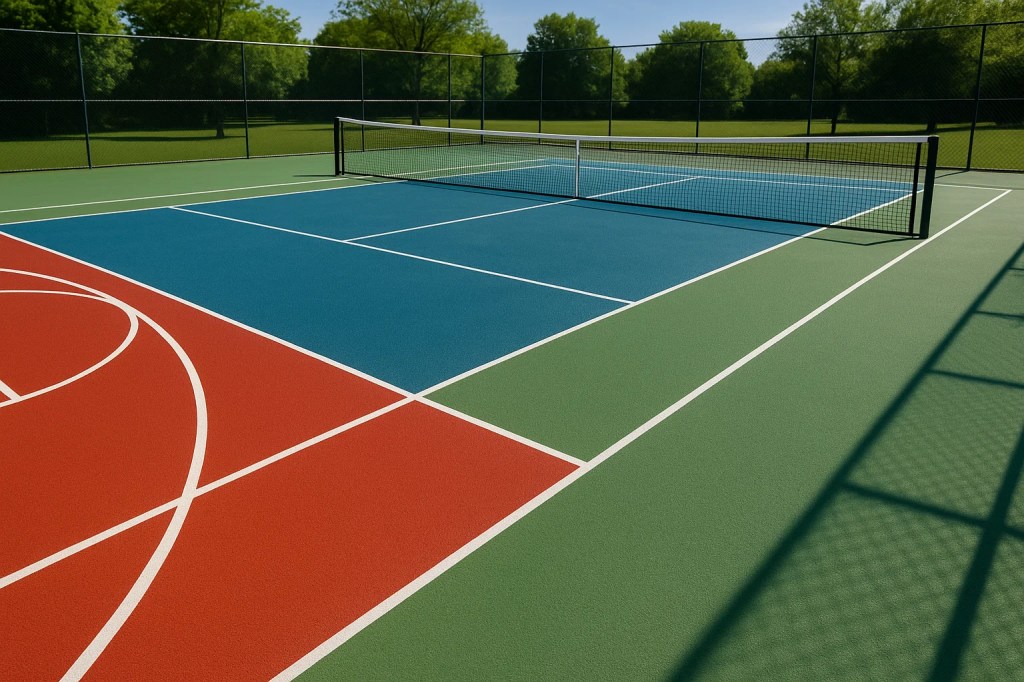
    Official pickleball courts are 20 feet wide by 44 feet long for both singles and doubles play. You’ll also need adequate space around the court for player movement—ideally at least 10 feet on the sides and 20 feet behind the baselines.

    The court is divided into zones:

    • The non-volley zone (or “kitchen”)
    • The service areas
    • The baselines and sidelines

    Accuracy is important here—incorrect measurements can make gameplay frustrating or even unsafe.


    Step 4: Net Systems

    The net in pickleball is 36 inches high at the posts and 34 inches in the middle. Permanent nets are a must for dedicated facilities, while portable nets work for multi-use spaces. A high-quality net system will withstand tension, weather, and frequent use.


    Step 5: Fencing and Lighting

    Fencing keeps balls from flying out of bounds and helps define the playing area. Chain-link fencing is common, but windscreen fabric can be added to block distractions and improve visibility.

    If you want evening play, lighting is a key investment. Proper lighting should provide consistent coverage without blinding players. LED fixtures are energy-efficient and have become the go-to choice.


    Step 6: Cost Considerations

    The cost of pickleball court construction can vary widely, from $15,000 for a basic outdoor asphalt court to $40,000+ for a high-end facility with premium surfacing, lighting, and fencing. Indoor courts typically require a bigger budget due to building infrastructure needs.

    Budget planning should also include ongoing maintenance—resurfacing every 4–8 years, net replacement, and repainting lines as needed.


    Step 7: Accessibility and Amenities

    To make your court inviting, think beyond the playing surface. Benches, shade structures, water stations, and accessible pathways can transform a simple court into a true community hub. Adding these touches helps players stick around longer and encourages social interaction, which is a big part of pickleball’s charm.


    Why It’s Worth the Investment

    Investing in pickleball court construction isn’t just about meeting demand—it’s about building community. Pickleball has a unique social energy that brings people of all ages together, from teens looking for a new sport to retirees seeking fun exercise.

    Whether you’re planning one court for your backyard or a dozen for a public park, following best practices for location, surfacing, and amenities ensures your court will be a long-lasting asset. With proper planning, your pickleball court could become the go-to gathering spot in your area—and maybe even the birthplace of your community’s next champion.

  • Matka 420 – The Game, the Craze, and the Culture Behind It

    If you’ve been scrolling through social media lately, you might have seen the term Matka 420 popping up in conversations, memes, and even trending hashtags. But what exactly is it? For some, it’s just an exciting numbers game; for others, it’s a nostalgic throwback to old-school betting traditions. Whether you’re new to it or have heard whispers about it from friends, this article will take you through the origins, the buzz, and the cultural fascination with Matka 420.

    What is Matka 420?

    Matka 420 refers to a modern twist on the traditional “Matka” game, a form of number-based gambling that gained massive popularity in India during the 1960s and 70s. Back then, it wasn’t played on apps or websites—it was a face-to-face affair involving handwritten slips, local bookies, and word-of-mouth results. Today, technology has brought the game into the digital space, making it more accessible but also more widely discussed (and debated).

    The “420” in the name is more than just a random number. In Indian slang, “420” often refers to trickery or cleverness, thanks to Section 420 of the Indian Penal Code, which deals with cheating and fraud. So, Matka 420 carries a playful, cheeky vibe—almost as if it’s winking at its own risky reputation.

    How It Works

    The core idea of Matka 420 is simple: players choose numbers, a draw is made, and winners are decided based on the match. While the rules can vary depending on the platform or community, the thrill comes from the anticipation—did your lucky number hit or miss?

    Many people treat Matka 420 like a social game, sharing tips, lucky combinations, and win stories on WhatsApp groups, Facebook pages, and Instagram reels. It’s as much about the community as it is about the numbers themselves.

    The Social Media Influence

    One of the reasons Matka 420 has made such a comeback is its adaptability to social media culture. On TikTok and Instagram, you’ll find:

    • Short, suspense-filled clips showing live draws.
    • Tips and predictions from self-proclaimed “Matka masters.”
    • Funny memes that poke fun at wins, losses, and the unpredictability of luck.

    Because it thrives on short bursts of excitement, the game fits perfectly into the fast-paced, shareable nature of online platforms. And with hashtags like #Matka420 trending in certain circles, the game continues to find new audiences.

    The Allure of Numbers and Luck

    Humans have always been fascinated by numbers, patterns, and the possibility of turning a small risk into a big win. Matka 420 plays right into that psychological sweet spot. The feeling of picking a number and then waiting for the result creates a unique mix of tension and hope.

    For some, it’s about testing intuition. For others, it’s just a fun pastime to break up the routine of everyday life. And yes, there’s always that underlying dream—what if today’s the day your number hits big?

    Cultural Significance

    The original Matka game wasn’t just about betting—it was also a social event. People would gather, talk about their picks, share rumors about upcoming draws, and celebrate wins together. In its digital form, Matka 420 still preserves that sense of community, even if the conversations now happen in chatrooms instead of tea shops.

    Interestingly, the “420” part gives the game an added cultural twist. It hints at the mischievous, the daring, and the unpredictable—elements that have always been part of Matka’s charm.

    The Responsible Play Conversation

    While Matka 420 can be a source of entertainment, it’s worth noting that it still involves risk. Playing for fun is one thing, but relying on it for income can lead to financial trouble. Many online platforms now promote responsible play, encouraging limits, breaks, and awareness about gambling habits.

    Some players stick to “mock” or “free” games to enjoy the thrill without any monetary stakes. This way, they get the rush of guessing and winning without the pressure of loss.

    Why It’s Still Relevant

    In an age where entertainment is instant, Matka 420 stands out because it blends tradition with technology. It’s a bridge between the old-school charm of handwritten slips and the instant-gratification world of mobile apps. It offers a little nostalgia for older players while providing fresh excitement for new ones.

    Plus, the social element—sharing predictions, discussing results, and posting reactions—means it’s not just about winning or losing, but about being part of a conversation that’s bigger than the game itself.

    Final Thoughts

    Whether you see it as a harmless numbers game, a cultural relic brought into the digital era, or a risky thrill, there’s no denying that Matka 420 has a special place in modern pop culture. It’s cheeky, it’s unpredictable, and it knows how to keep people talking.

  • Unlocking Performance: Why Mercedes AMG GLE63 Downpipes Are a Game Changer

    If you own a Mercedes AMG GLE63, you already know it’s not just an SUV — it’s a statement. With its hand-built AMG V8 biturbo engine, it delivers both brute force and refined luxury in a way few vehicles can match. But for enthusiasts looking to squeeze every last drop of performance and thrill from their ride, one upgrade stands out above the rest: Mercedes AMG GLE63 downpipes.

    What Are Downpipes, and Why Do They Matter?

    In simple terms, downpipes are part of your exhaust system that connect the turbochargers to the rest of the exhaust. They carry hot exhaust gases away from the engine and toward the catalytic converters and mufflers.

    Stock downpipes are designed to meet strict emission regulations and noise restrictions, which means they can be more restrictive than performance-oriented drivers would like. Aftermarket mercedes amg gle63 downpipes are built to reduce backpressure, improve exhaust flow, and unleash the raw sound of that AMG-tuned V8.

    Think of them like letting your engine breathe more freely. More air in and more air out means faster spool times for the turbos, better throttle response, and potentially significant horsepower gains.


    Performance Gains You Can Feel

    One of the biggest reasons owners switch to upgraded Mercedes AMG GLE63 downpipes is the performance jump. Depending on whether you go with high-flow catted or catless downpipes, you can expect:

    • Horsepower and torque boost — Many drivers see gains of 40–70 HP with tuning.
    • Better turbo efficiency — Reduced backpressure allows your turbos to spool faster, improving acceleration.
    • Enhanced exhaust note — A throatier, more aggressive AMG soundtrack that makes the drive more exhilarating.

    When paired with a performance tune, the results can be dramatic. The already fierce GLE63 transforms into a road-devouring powerhouse.


    Catted vs. Catless: What’s Right for You?

    There are two main options when it comes to aftermarket Mercedes AMG GLE63 downpipes:

    1. High-Flow Catted Downpipes
      • Retain catalytic converters for emissions compliance.
      • Reduce restrictions compared to stock cats.
      • Offer performance gains while keeping exhaust odor and emissions in check.
      • Slightly quieter than catless setups.
    2. Catless Downpipes
      • Completely remove catalytic converters for maximum exhaust flow.
      • Deliver the highest performance gains and loudest sound.
      • Often for track or off-road use due to emissions regulations.
      • May trigger check engine lights without proper tuning.

    Your choice comes down to your priorities: street legality and comfort, or all-out performance and sound.


    Sound: The AMG Roar, Unleashed

    If there’s one thing AMG owners love as much as acceleration, it’s the soundtrack. Upgraded Mercedes AMG GLE63 downpipes bring out a deeper, more aggressive exhaust note that’s impossible to ignore. That distinctive AMG crackle and burble during gear changes becomes more pronounced, and under full throttle, the roar turns heads from blocks away.

    For many drivers, the sound alone is worth the upgrade.


    Installation and Tuning Considerations

    Swapping in performance Mercedes AMG GLE63 downpipes isn’t quite as simple as changing a muffler. It requires mechanical know-how or a trusted performance shop. Since these downpipes connect directly to the turbochargers, proper installation is critical to avoid exhaust leaks or turbo damage.

    Additionally, because changing downpipes alters exhaust flow, a custom ECU tune is highly recommended. This not only maximizes performance gains but also ensures the engine runs safely without triggering fault codes.


    Legal and Warranty Notes

    It’s important to note that some Mercedes AMG GLE63 downpipes, particularly catless ones, may not be legal for street use in certain areas due to emissions regulations. They may also affect your factory warranty if not installed or tuned by an authorized AMG performance partner.

    Before upgrading, check local laws and consult your dealership or performance shop about warranty implications.


    Final Thoughts: The Ultimate AMG Upgrade

    The Mercedes AMG GLE63 is already one of the most capable performance SUVs on the road, but installing high-quality Mercedes AMG GLE63 downpipes can take it to a whole new level. From increased horsepower and torque to a more intoxicating exhaust note, the benefits are hard to ignore for enthusiasts who crave more from their AMG experience.

    Whether you’re chasing better quarter-mile times, more spirited daily driving, or simply the joy of hearing that V8 sing, upgrading your downpipes might just be the best way to unlock the full potential of your GLE63.

Design a site like this with WordPress.com
Get started